Why your child listens to everyone but you: Peer Orientation in Hong Kong

Peer Orientation Third Culture Kids Hong Kong
Summary: We can guide our children back to us, one accepting conversation at a time
There is a particular kind of hurt that lives in this sentence, and I hear it often.
My child just does not listen to me. But the moment their friend says the same thing I have been saying for weeks, suddenly it is the most obvious truth in the world.
If that lands somewhere familiar, I want to offer you a simple explanation. What you are describing is an attachment orientation problem. Understanding the difference changes everything about how you respond.
The changing context of Parenting in Hong Kong and the World over
Let us begin with context. Because parenting in Hong Kong in 2026 is genuinely different from parenting a generation ago, and not primarily because children have changed.
Most of us are raising children far from the wider family and community that would have naturally held us and our children in previous generations. The grandparents who would have reinforced our values, the aunts and uncles who would have offered a different adult relationship, the neighbours who would have known our children by name: most of us strive to build that here, but it is not an organic village.
At the same time, many of us are working longer hours than previous generations did. Our children spend the majority of their waking hours in structured settings with age-mates or at playdates organised by domestic helpers and caregivers beyond the immediate family.
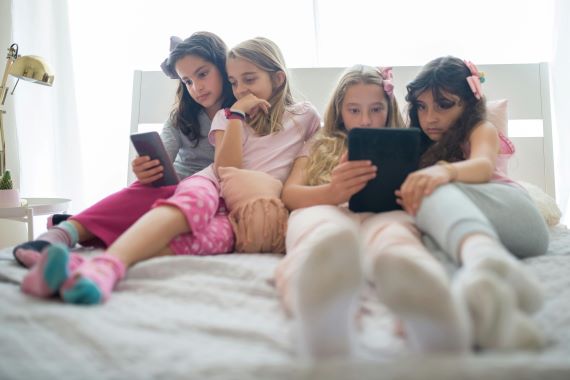
Further, Screens allow peer contact to continue around the clock, even when they are physically away from their peers.
None of these things are a reflection of your love for your child or your commitment as a parent. But together they have created the conditions for something that developmental psychologist Gordon Neufeld calls peer orientation. And it is quietly reshaping the parent-child relationship in ways that deserve our attention.
Peer Contact is not the Problem. Peer Orientation is
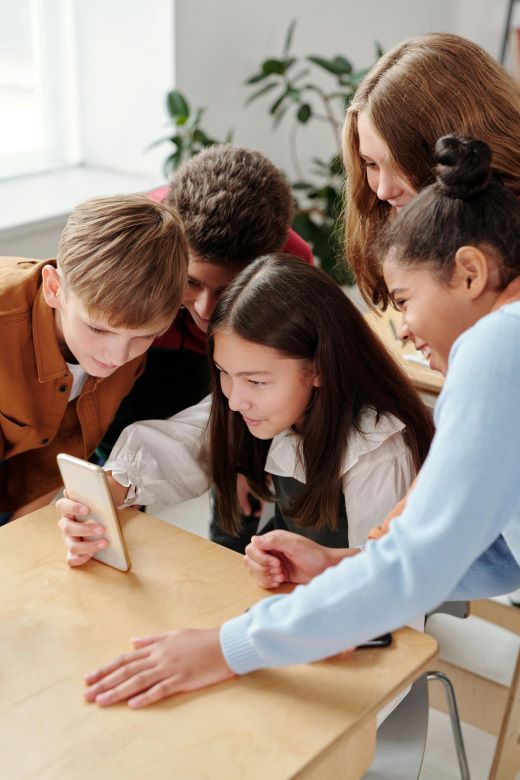
I want to spend a moment on this distinction, because the goal here is never to make parents afraid of peer friendships. Friendships are wonderful. Learning to navigate relationships with age-mates is genuinely important. None of that is in question.
Peer orientation is something different. It is when a child begins to look to peers not just for company and fun, but for the things they should be receiving from the adults in their lives: a sense of direction, belonging, values, identity, and guidance.
Neufeld and Maté describe it this way: every child has an instinctive need for attachment. That drive to orient toward someone, to mirror them, to adopt their values and behaviours and ways of seeing the world, is built into the nervous system. It is how children are designed to grow. The question is simply who that orienting happens toward.
When a child is strongly attached to their parents, that orienting happens there, within a safe, qualified, responsible setting. They take direction from us. They absorb our values. They care about our approval. When that attachment has weakened, the nervous system does not stop orienting. It finds its compass elsewhere. And in a world saturated with peer contact, that compass turns toward peers, who lack maturity and are unqualified to fulfil that role as an attachment figure.
Parenting, not Skills to develop but a Relationship to be nurtured

This is the hardest thing to hear. And I say it with tremendous compassion, because I work with parents who are trying everything.
No parenting technique, however well-researched and carefully applied, can compensate for a lack of attachment. This is not a commentary on effort or love. Parenting is not a set of skills to be learned. It is a relationship.
Think of it this way. Parenting strategies are the furniture in the room. Attachment is the room itself. Without the room, the furniture has nowhere to exist. Rules, rewards, consequences, gentle parenting, authoritative parenting: all of these require the infrastructure of attachment to have any traction at all.
And I want to say clearly: this is not your fault. The conditions of expat life in Hong Kong work structurally against deep and sustained parent-child attachment. We are isolated from our villages. We are exhausted. Our children are saturated with peer contact from a very early age. We are doing our best within conditions that were not designed with attachment in mind.
The good news is that it is never too late to rebuild. Deliberate, thoughtful, and consistent attention to the relationship changes things. Slowly. Imperfectly. But Intentionally...
The Counterintuitive approach
When a child is peer-oriented and resistant, the instinct is to tighten the boundaries. Add consequences. Try harder.
Neufeld and Maté ask us to do something that goes against every instinct we have in that moment. They ask us to become warmer. More accepting. More nurturing.
Not softer in the sense of having no expectations. Warmer in the sense of actively rebuilding the emotional connection. Collecting the child before directing them. Prioritising the relationship over the compliance. Letting the child feel, again and again, that the parent-child attachment is unconditional.
The answer to a child who has lost their orientation toward us is not to demand it back. It is to make ourselves, slowly and consistently, worth orienting toward again.
It starts with being available, physically and emotionally.
Being attentive, listening to hear rather than to fix and move on.
Being accepting, releasing our preconceived expectations, loving and accepting the child(ren) we have...
Where to Begin
Connection before correction. Warmth before expectation. Presence before technique. And most important of all:
attachment before attention.
Rebuilding happens not through grand gestures but through ordinary, consistent, unremarkable acts of showing up.
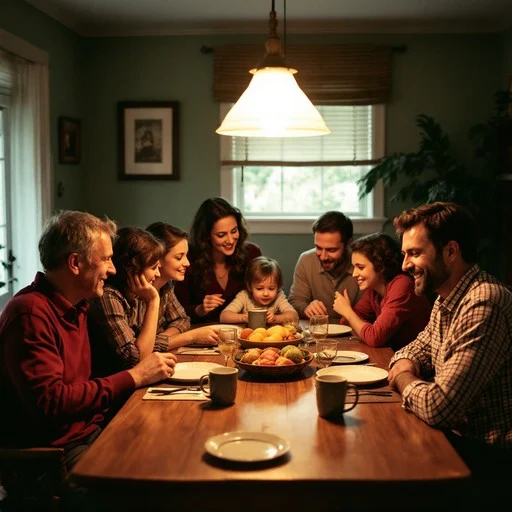
• The meal together.
• The drive to training and the side-by-side conversation that happens naturally there.
• The ten minutes at the end of the day when you put your phone down and ask a question with no agenda.
• Making eye contact. Smiling at them, often, for no reason.
• Delighting in them, just as they are.
Trust, slowly and stubbornly, that the relationship you are rebuilding is more powerful than any strategy you will ever find in a parenting book.
Summary
In summary,
• Peer orientation is not peer friendship. It is whathappens when children look to peers for the direction, values, and belongingthat qualified, caring adults are designed to offer.
• It is not a parenting failure. It is what happens whenthe conditions of modern life erode the parent-child attachment.
• No parenting technique will compensate for a lack ofattachment. The infrastructure must come first.
• The answer is not more firmness. It is more warmth.More collection. More consistent, unconditional presence.
• Belonging begins with the self, then the family, thenthe community. Secure peer relationships come after, not instead of, thosefoundations.
IF THIS RESONATED AND YOU WOULD LIKE SUPPORT,
I work with families inHong Kong to rebuild the attachment relationship that makes everything elsepossible. A warm, confidential conversation is always available.
lisel@ourflourishingfamilies.com • www.ourflourishingfamilies.com
Related blog stories


Join our community