Twenty Thousand No's

Negative self- image of child with ADHD and Autism in Hong Kong
What the research tells us about neurodivergent children and what we can do
The exhaustion you feel is real.The grief you sometimes feel, for the childhood you imagined, for the ease thatdoes not come, is real and it does not make you a bad parent. The moments whereyou said the wrong thing or raised your voice or cried in the car on the wayhome from school are not the measure of your love. They are the evidence of it.
Feedback received by Neurodivergent kids in Hong Kong

There is a number that stops every room I am in when I share it.
By the time a neurodivergent child reaches their twelfth birthday, they have received, on average, 20,000 more negative messages than their neurotypical peers.
Twenty thousand.
That is not a typo, and it is not an exaggeration. It comes from the work of Dr Russell Barkley, one of the world's leading researchers in ADHD and executive function. And when you sit with it, it breaks down into something even harder to hold: more than 400 extra corrections every month, more than 100 every week, more than 20 every single day.
Every single day, your child is absorbing a message about who they are. And for many of our children, that message, delivered by loving parents, well-meaning teachers, frustrated siblings, and eventually their own relentless inner voice, is that something is fundamentally wrong with them.
The parents I sit with in Hong Kong

I want to be honest about who I am writing this for.
The parents I work with are almost without exception, some of the most dedicated, high-achieving, deeply loving, doting people I have ever met. They are executives and educators and founders and professionals. They have read every book. They attend every meeting. They fight for every accommodation and push for every assessment. They love their children with a fierceness that is almost physical.
And they are carrying a shame that nobody in their social circle is talking about.
In Hong Kong especially, where achievement is visible and comparison is constant, the weight of raising a neurodivergent child can feel profoundly isolating. The shame of the school report that comes home with a list of concerns. The birthday party invitation that simply never arrives. The meltdown at the restaurant, the looks from other tables. The group chat where other parents share milestones and you scroll past in silence. The feeling of being capable and accomplished in every other part of your life, and somehow not enough here, in the part that matters most.
I want to say something clearly to every parent reading this: that shame is not yours to carry. It was built for you by a world that was not designed with your child in mind. And it is the first thing we need to gently put down before anything else can shift.
What 20,000 negative messages does to a child's inner world
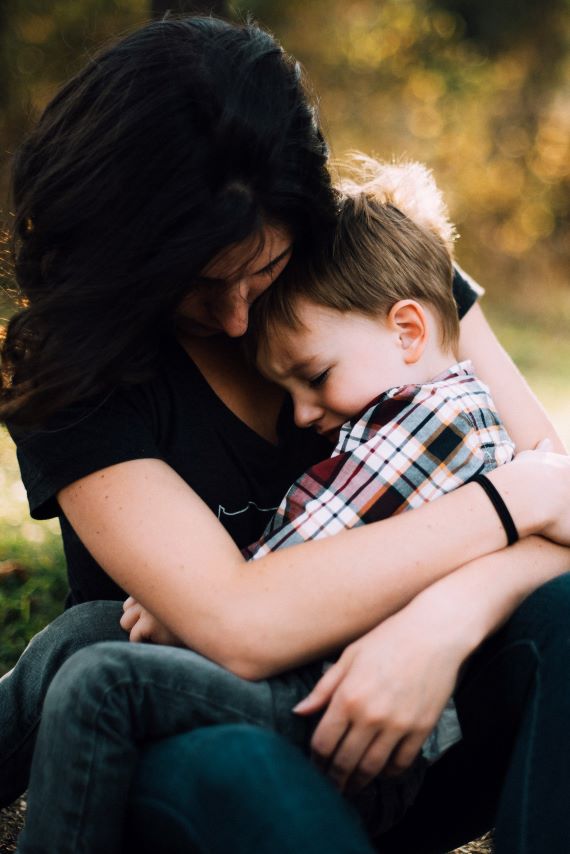
Criticism is not neutral. When a child hears corrective, dismissive, or negative feedback repeatedly, their nervous system begins to anticipate it. They develop what researchers call a negativity bias that becomes the actual lens through which they experience themselves, their relationships, and their potential.
They become children who flinch before they have even done anything wrong. Children who interpret a parent's sigh across the room as confirmation of their failure. Children who, when asked how their day was, automatically scan for what went badly before they can find what went well.
And here is what I see most often in my work, and what breaks my heart every single time: by the time many of our neurodivergent children reach adolescence, the critical voice is no longer coming from outside. It is fully installed. It is their own.
This is not a small thing. The internal narrative a child builds about themselves in these early years becomes the foundation for how they approach challenge, relationship, setback, and possibility for the rest of their lives. What we build with our words, carefully and intentionally, we can also begin to rebuild.
The social exclusion that compounds everything

The 20,000 number accounts for corrections at home and at school. What it does not fully capture is what happens in the social landscape, which for many neurodivergent children in Hong Kong is its own quiet source of pain.
Feeling different is exhausting in a way that is hard to put into words. I do not mean unique. But a sense of self that affects their self-esteem. When the unwritten social rules that everyone else seems to just know feel genuinely invisible to you. When you say the wrong thing at the wrong moment and watch the group dynamic shift and you cannot quite trace what you did. When you are the child who is always a little too much, or not quite enough, or simply puzzling to the children around you.
Our children feel this. They carry it home. And then they walk through the door into the one place that is supposed to be safe, and they are met, often, with more correction.
I am not saying this to add to anyone's guilt. I am saying it because understanding the full weight of what our children are navigating is the beginning of responding to them differently. Compassion for their experience produces compassion in our interactions. And compassion, repeated consistently over time, is what changes the story.
This is not about being a perfect parent
I want to say something about the high-achieving Hong Kong parent tendency, and I know it because I see it every week, to turn new information into a new standard to fail at.
Please do not do that with this number.
The 20,000 figure is not an indictment of your parenting. It is a description of a system that was largely built for neurotypical children and that produces correction as a natural byproduct for children who move through it differently. You are not the problem. You are, in fact, the solution, because you are here, you are paying attention, and you are willing to do something with what you learn.
The exhaustion you feel is real. The grief you carry sometimes, for the childhood you imagined, for the ease that does not come, is real and it is normal and it does not make you a bad parent. The moments where you said the wrong thing, or raised your voice, or cried on the drive home from school, are not the measure of your love. They are the evidence of it.
The 20,000 number is heavy. But here is the other side of it: you are the most important variable in your child's story. Not the school, not the assessments, not the interventions. You. Your voice. Your presence. The way you look at them when they walk into a room.
For the three evidence-based things you can try this weekend to begin shifting that ratio, head over to my Substack where the full toolkit is waiting for you.
If any of this feels heavy and you are looking for a warm, accepting, compassionate space, please reach out to me.
Related blog stories


Join our community