School Holidays, Sensory Overload, Overstimulation: Practical Self-Care for Hong Kong Mums

School Holidays Hong Kong working mum
Summary
We talk a lot about sleep deprivation. And yes. Of course. The broken nights, the early mornings, the years of interrupted sleep that accumulate in the body in ways that go far beyond tiredness. Sleep deprivation is real and it matters and if that is all it were, it would still be enough.
But that is not all it is.
I want to talk about the myriad of other things. That invisible load, the constant overwhelm, the feeling of never keeping on top of things that sits underneath the exhaustion and that I think we do not name often enough, because it does not have a clean label and it is harder to explain to someone who is not living it.
It is not just the sleep deprivation, it is everything else, while ALSO being chronically sleep deprived...
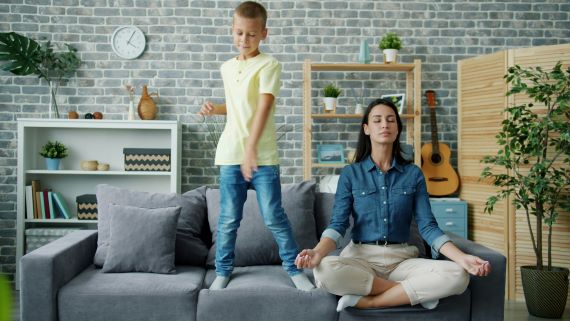
It is the noise that starts before you have fully opened your eyes. The voices, the requests, the questions, the conflicts. The child who needs you at the table, while the other child who needs you to play hide n seek. More often than not, at exactly the same time.
It is the repeat requests. Not one ask, but the fourth and fifth version of the same ask, the one where you are no longer responding to a need but managing a negotiation. It is the limit-setting that never actually ends. No, not now. Please stop. I said no. We talked about this. I am going to count to three. All of the invisible labour of holding the line, over and again, with a threenager who has the stamina of someone who napped at two and the convictions of a barrister. Or a tween who can argue a point with a precision that would make most lawyers uncomfortable and who saves this particular skill exclusively for conversations they are having with you.
It is the sibling bickering that finds you in every room of the house. The low-level hum of conflict that you are expected to arbitrate with fairness and consistency while simultaneously making dinner, answering a work message, and remembering whether the permission slip needs to be in by Thursday or Friday.
Not to mention day to day chores, work, administrative details, topped off by years of sleep deprivation.
The issue is not any one of these demands. It is all of them, together, often at the same time. Needing to recharge everyone else’s batteries, while running on reserve yourself.
Your Nervous System in overdrive

Your nervous system is not designed for relentless input. It is designed for rhythm: activation, processing, and rest, engagement and recovery, expansion and release. When you are caring for children, particularly during school holidays or other periods of reduced separation, the activation is continuous. The rest does not come. And over time, your nervous system moves into a state of chronic low-level threat response.
This is why your window of tolerance is low. Why you can be laughing at something one moment and in tears the next. This explains why you feel, at the end of a day when nothing particularly dramatic happened, as though you have run a marathon in your body and your head. It is your nervous system in overdrive.
The answer is not a weekend getaway with your girlfriends (though that would be wonderful). The answers lie in real life, on any given Tuesday in Hong Kong, micro efforts to recharge you, meet you right where you are. The opportunity to create your own sanctuary, a moment or two to call your own..
Creating your sanctuary- Self Care your way
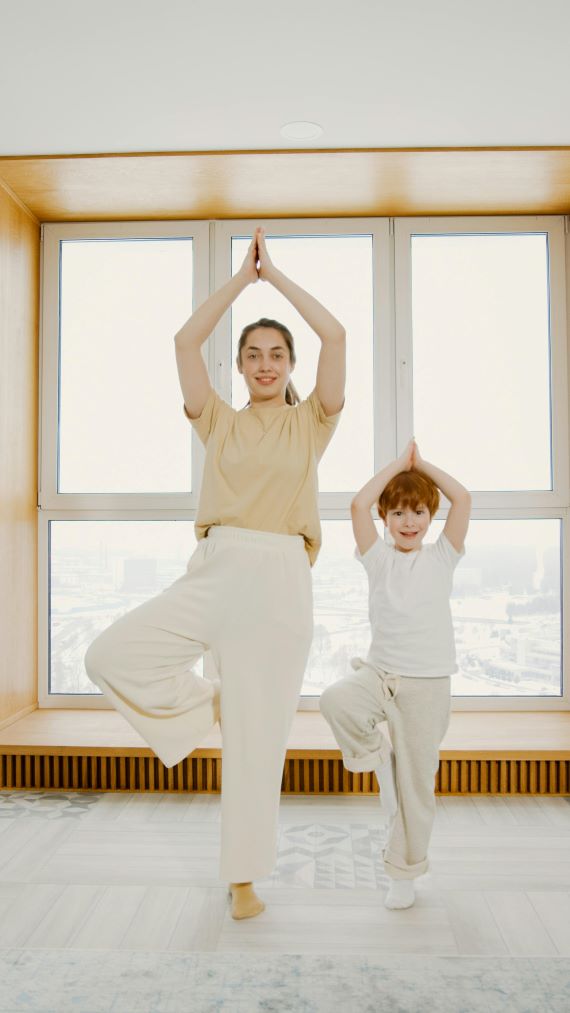
I want to be honest about something. When I talk about self-care, I am not talking about the version that requires elaborate planning, a booking, a babysitter and three hours of free time. I know that for many mums, particularly here in Hong Kong where the pace is relentless and the expectations are high, that version of self-care is aspirational at best and actively guilt-inducing at worst.
I am talking about something simpler. Deliberately chosen moments in your existing day where you are present in your own body, where the input pauses, even briefly, and where you are just yours for a moment.
These are not indulgences. They are maintenance. They are the difference between a nervous system that is continuously depleted and one that gets just enough recovery to keep going with something resembling warmth.
Micro-Moments of Self Care- Right where you are

These are real. They work. And most of them take under two minutes.
1. While the kettle boils
One breath in through the nose to the count of three, hold for five, exhale slowly, all the way to a count of seven. Repeat this three times. Practise this ideally on the hour, every hour. Just watch the kettle and breathe. Two minutes of genuine stillness while the water heats.
2. As you pour the water into your cup
Notice the steam. The sound of the water. The warmth of the cup in your hands when you pick it up. This is not a meditation retreat. It is ten seconds of sensory presence in the middle of your morning.
3. Cold water on your hands
Run your hands under cold water at the kitchen sink. Thirty seconds. It activates the vagus nerve and genuinely settles an activated nervous system. It sounds almost absurdly simple. It works.
4. Wake fifteen minutes before they do
This one requires going to bed earlier, which I know is its own challenge. But the fifteen minutes before the house wakes up are worth more, neurologically, than an extra fifteen minutes of broken sleep at the end. Sit with your coffee. Do not scroll. Just be in the quiet before it begins.
5. A candle during the feed or the still moment
If you are feeding a baby, or sitting in any moment of enforced stillness that you are currently experiencing as relentless rather than restorative, light a candle. Something that smells like something you chose. It signals to your nervous system, in a quiet and animal way, that this moment is yours.
6. Your playlist while you prep dinner
Not their playlist. Not the background television. Yours. The music that makes you feel like yourself. Put it on loud enough to actually hear it. Let your body move a little if it wants to. Dinner preparation is thirty minutes of your life every single day. It can be yours.
7. Quiet time in the afternoon
This is not a nap, though if a nap is possible, please take it. This is thirty minutes in the middle of the day where you declare that the house is going quiet. Children who no longer nap can rest. They can read, draw, listen to an audiobook. The rule is: no one asks me for anything for thirty minutes. Hold this boundary as if your life depends on it. In some ways, it does.
8. Reading together
This one serves two purposes. A child who is being read to is a child who is quiet, engaged, and close to you without demanding anything active from you. And you get to inhabit a story that is not your own for a little while. Read slowly. Enjoy the pictures. There is no rush.
School Holidays, Blurred Boundaries, Sensory Overload
School holidays are, genuinely, one of the most beautiful and one of the most demanding periods in the parenting year. The pace drops. There is time for things you cannot fit into the school term. There is proximity and togetherness and the kind of slow morning that you have been longing for.
And there is also no separation. None of the natural breathing space that the school day provides, the hours where you are yourself rather than primarily someone's parent. For many mums, particularly those who are full-time caregivers, this reduction in separation during holidays tips something over. It is not that you love your children less. It is that your nervous system has a limit and the holidays push right up against it.
The micro sanctuary matters more during the holidays, not less. This is not the time to let go of the small practices that keep you regulated. It is the time to protect them more fiercely.
You are allowed to love your children deeply and also need a moment that belongs only to you.
Some closing thoughts for you...
I want to leave you with this. When you prioritise meeting your needs, without apology, without guilt, without explanations, you role model self-respect. Your children are watching how you treat yourself. And what they see becomes the template they carry into their own adult lives. That rest is not earned through productivity. That self-care is not selfish.
You deserve rest and recharge. Not when everything else is done. Now. In the ordinary, imperfect, noisy middle of it.
Written by Lisel Varley
Related blog stories


Join our community